On Friday, May 31, 1985, I was thirteen years old and eagerly anticipating my last week of seventh grade. I was on top of the world looking forward to the summer months ahead and the carefree days that awaited me. Sunshine and blue skies lie ahead.
My dad, grandfather and I were nearly finished shingling the roof on Grampa’s new wood shop. The skies were darkening. We knew a storm was coming. But the last few courses needed to be completed before the rain hit. We finished the last few shingles and climbed down from the roof as the skies darkened like nightfall – two hours early.
My aunt Shelley pulled into my grandparents’ driveway in her new Honda CRX and told us it was hailing in the small village of Atlantic, about two miles north. She said the Amish children were picking up hailstones in their yards, and that she had considered finding some cover and pulling over to protect her new car. But she decided to push forward and continue the last couple of miles. To this day, I’m beyond thankful she didn’t choose to pull over in Atlantic.
As the thunder and rain began, the sky looked an ominous grey-green like I had never seen before and havent seen since. We saw what seemed like a wall of dark clouds extending from the sky to the ground in the distance over Atlantic. From our vantage point, we had no idea an F-4 tornado was devastating the sleepy hamlet and killing five people on a 56-mile path of devastation that would ultimately claim a total of 23 souls.
As we ate dinner, we could hear the sirens of countless emergency vehicles on State Rt. 18 in the distance heading north. We knew something bad had come of the storm. Perhaps a fire from a lightning strike or downed power lines, we supposed.
A full twenty-plus years before the advent of social media, it took days to fully appreciate the severity of the outbreak through evening news reports and stories in the local newspapers. Our small rural community made national news. Atlantic was inaccessible unless you or a family member lived there. The National Guard had all roads in and out blocked to all but those with a good reason to be there. Amish from across the country rallied to aid their brethren in the Atlantic community in rebuilding. A couple of days after the storm I recall hearing a sound familiar only to my grandparents – the chug-chug-chug and shrill whistle of a steam locomotive transporting throngs of Amish workers to Atlantic on the Bessemer & Lake Erie Railroad tracks that ran along the eastern boundary of our family farm.
The Atlantic twister was one of 44 confirmed tornadoes that hit Ontario, Ohio, Pennsylvania and New York that fateful evening – including our state’s first and only F-5 tornado to date that ripped through parts of Trumbull County in Ohio and Mercer County in Pennsylvania, killing 18. It was one of the most colossal tornado outbreaks in eastern U.S. history. A total of 90 people lost their lives.
The bright and carefree summer I had anticipated now carried with it a cloud of sadness for those in the twister’s path.
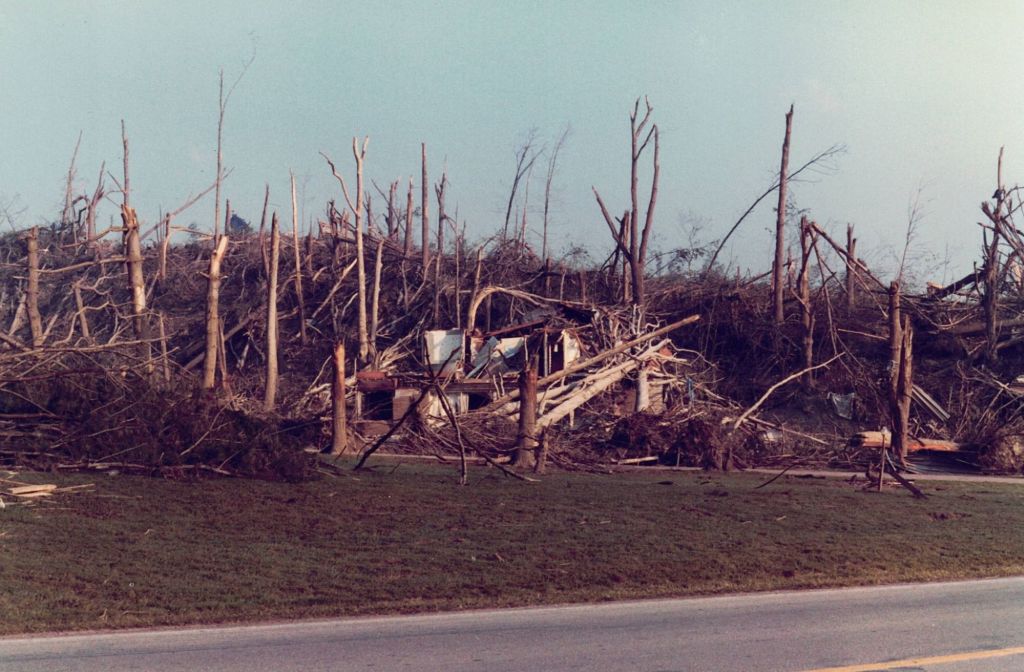
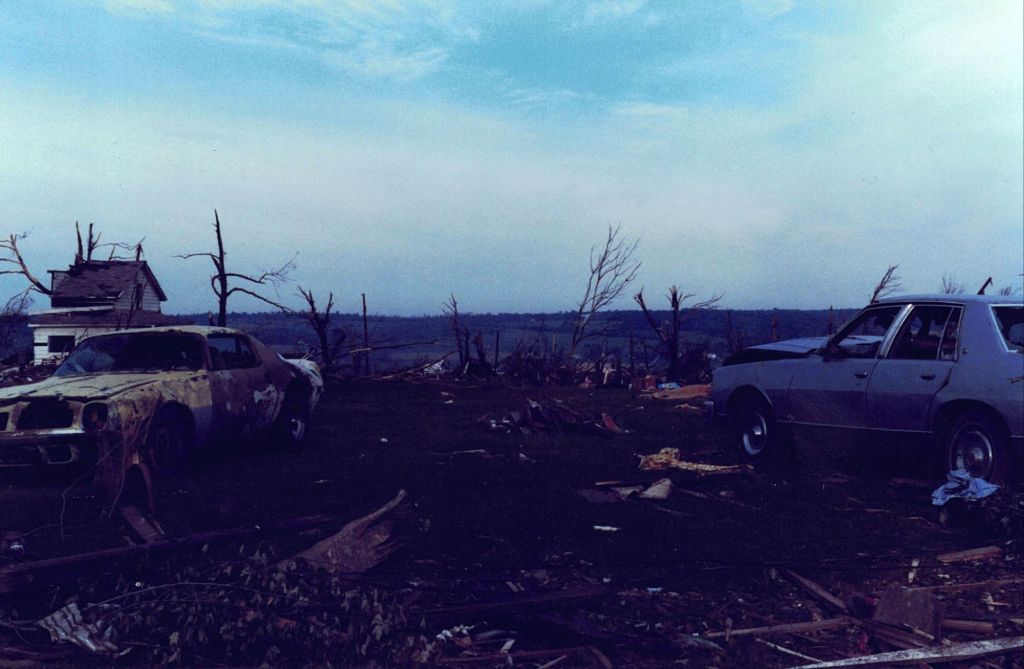
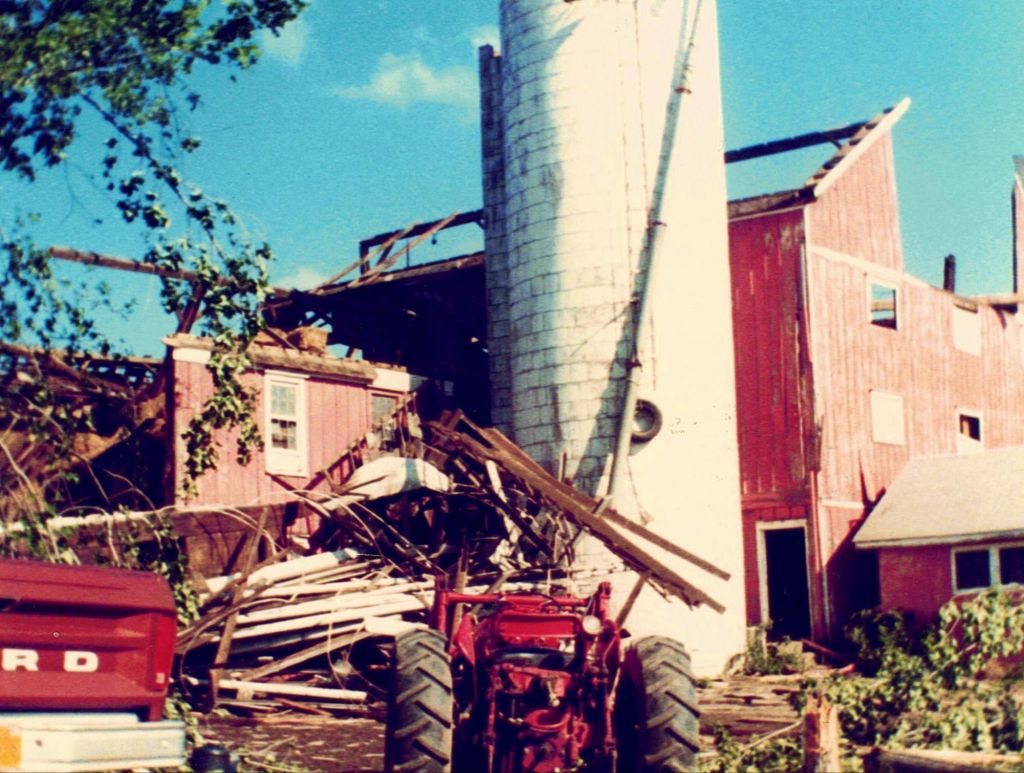
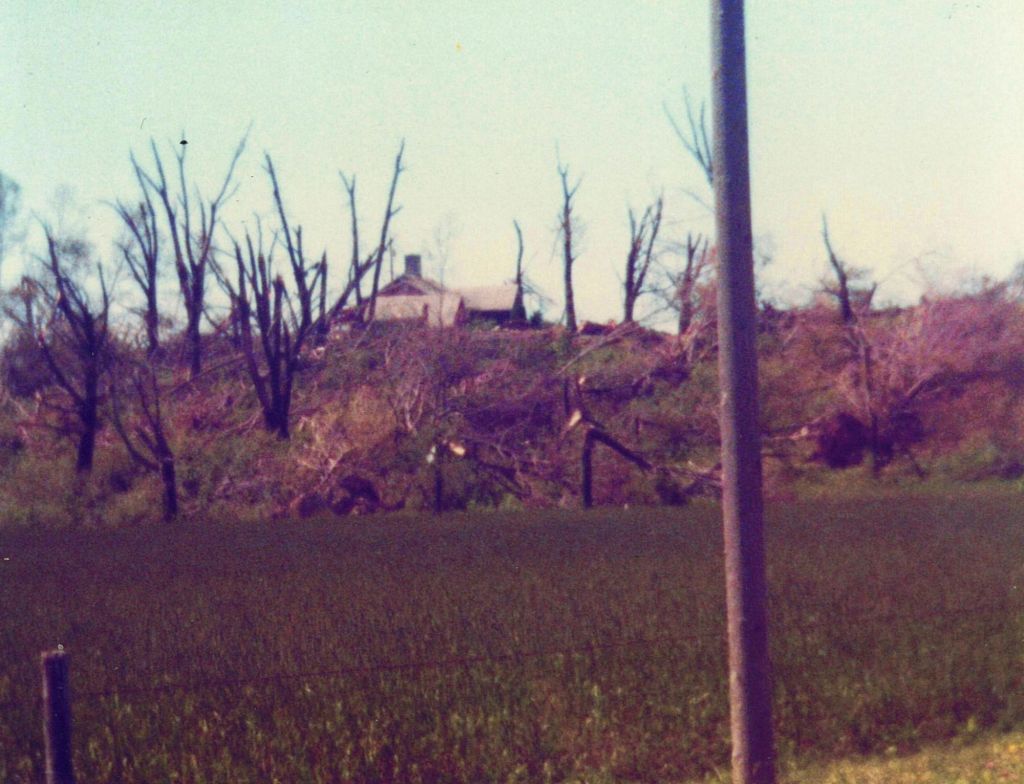
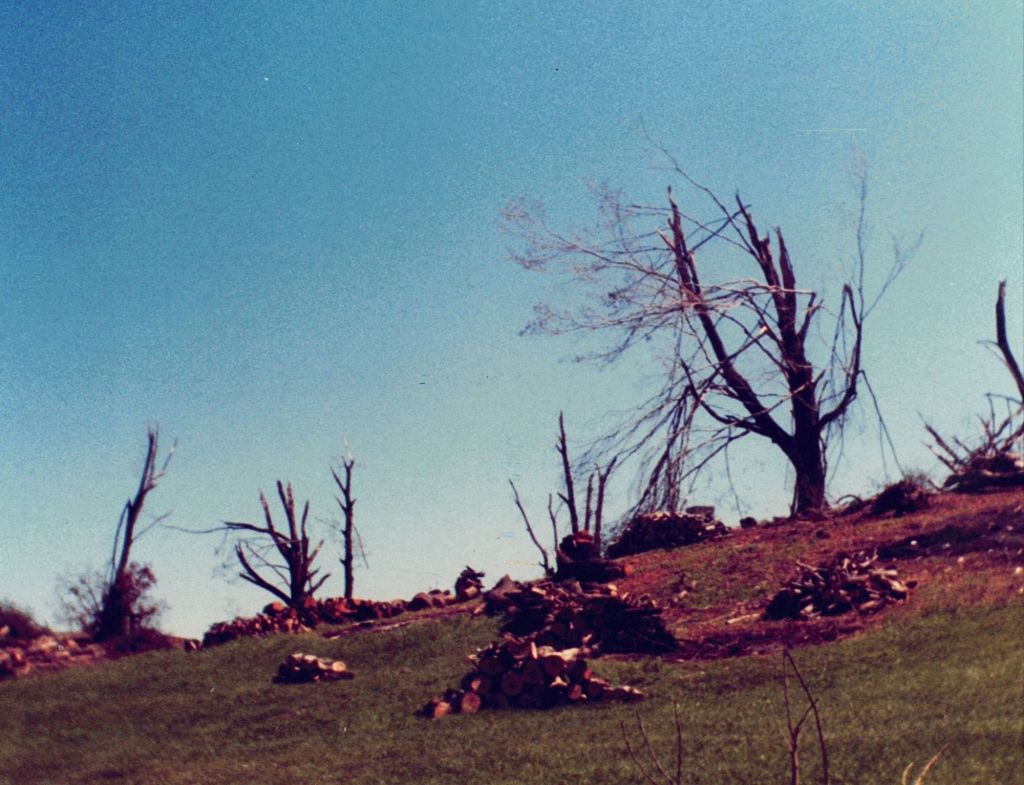
I took these photos in Atlantic several days later with my Pentax K-1000 when touring the aftermath with friends after the roads reopened.







 The Good Medicine Camp